Being aware of the digital lives, needs and expectations of our service users and embedding this into our assessments and daily engagements with them is not only good practice, but a key strategic priority for social work. To support the Health and Wellbeing 2026 plan, the Department of Health developed a specific Digital Strategy which seeks to use technology to improve the lives of the people in Northern Ireland. The need to use digital technologies was accelerated during the Covid-19 pandemic, therefore it is timely for us to consider how this applies to social work in a post-pandemic context.
The mission of the Digital Strategy is to,
“…design, develop and deliver digital services that support everyone to get the best care, support health and social care staff at work by streamlining information sharing across systems and optimising the use of data to improve the safety, quality and experience of care”.
You can learn more in this video on the digital vision for Northern Ireland and consider what part you can play in this next chapter of Health and Social Care practices in Northern Ireland:
Why digital?
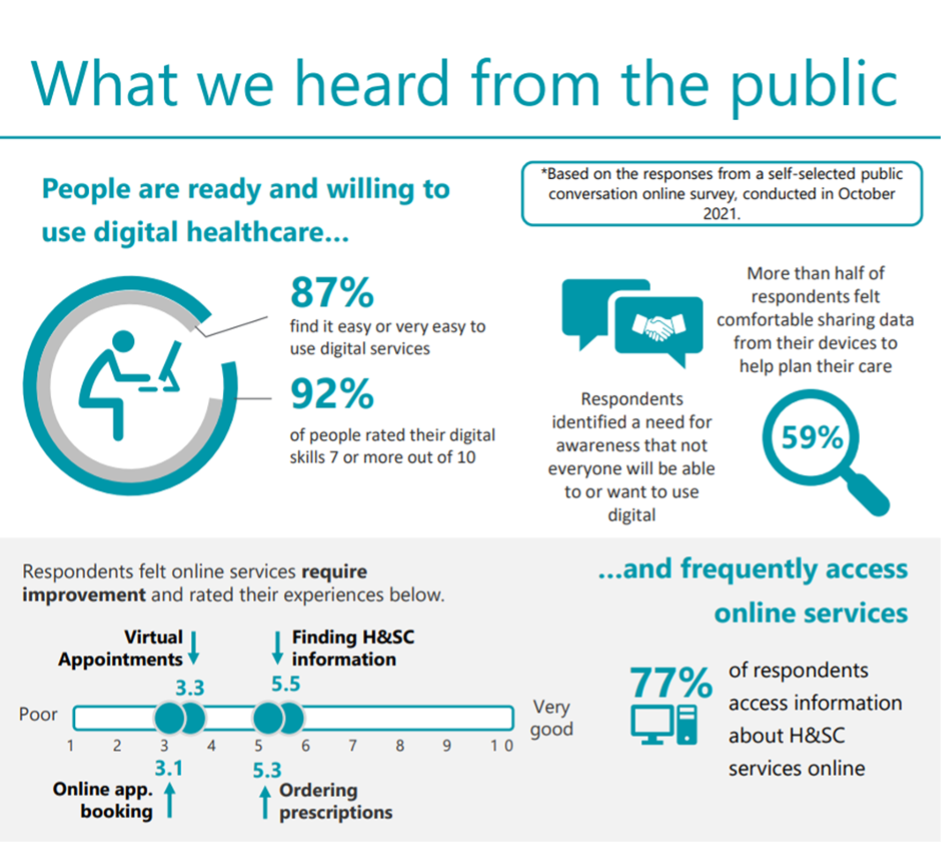
Technology is an intrinsic part of all our lives and as such this too should be reflected within the services we provide. Although there will be variation, overall, the public are digitally capable and willing to use digital solutions to access their care. We would want our own care to be reflective of the most up-to-date technology available and this is no less important in our role as social workers. See below inforgraphic from page 8 of the HSC Digital Stratety: Health and Social Care Northern Ireland 2022-2030.
Click image to view full size
Person-centred care
The Strategy is complemented by the All-Ireland Digital Capability Framework, which grounded in person-centred approaches to health and social care, citing that,
“The use of technologies, such as smart phones, social networks, and internet applications, all of which many people now have access to, is not only changing the way we communicate, but also providing innovative ways for us to engage with our health and well-being and giving us greater access to information. It can help to:
- Reduce inefficiencies
- Improve access
- Reduce costs
- Increase quality
- Make care more personalized
- Improve the patient-health and social care professional relationship
- Enable care closer to home
- Increase responsiveness”
How does this relate to my role as a social worker?
The line between the online and offline world is transparent and we use technology – as do our service users – in all areas of our lives. The statistics reflect this, with 99% of 18-24 year olds and 73% of adults over 65 being online in the UK. As is the case with ‘offline’ risks, the online world brings with it a myriad of benefits and risks, particularly for individuals who may have specific vulnerabilities. To mitigate these, the UK Government’s Online Safety Act (2023) focuses on how to make the internet a safer place for all, with particular consideration given to safeguarding children. Additionally, there are specific strategies focused on our role as social workers. For example, priority six of the Social Work/Social Care Learning and Improvement Strategy 2019-2027 focuses on the importance of readying social workers to practice in a digital world and outlines its aspiration that we will,
“…have the knowledge and skills they need to better understand and manage the risks associated with the use of technology in the workplace, and to help to maintain the safety of people who use services within a complex digital world”.
Underpinning all of this are our NI Social Care Council Standards (2019) which require us to uphold trust and confidence in social work services and ensure our behaviour reflects the Social Care standards, irrespective of whether this is in our digital or face-to-face interactions.
Building our Digital Capability
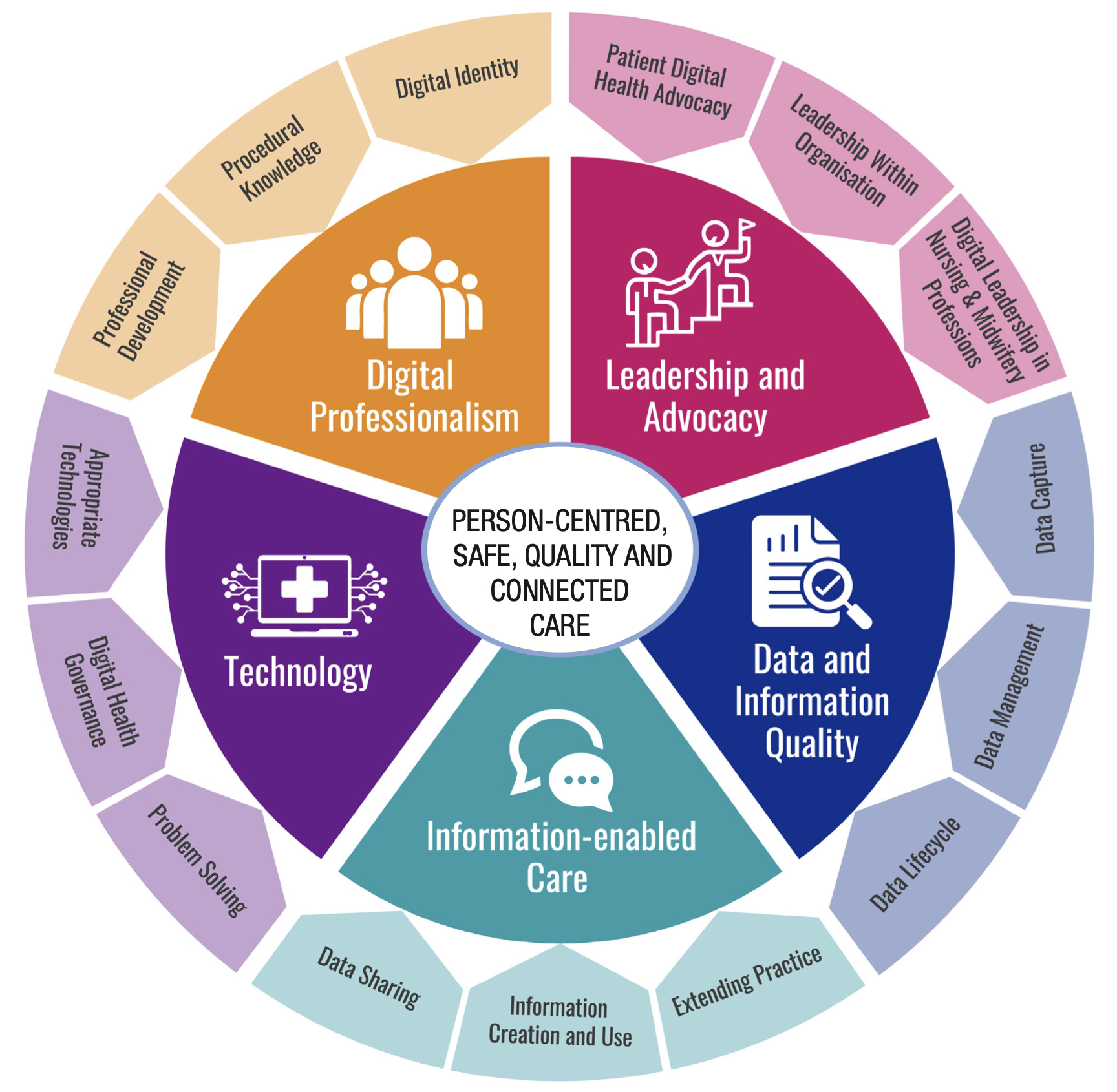
The all-Ireland Digital Capabilities Framework provides us with a road map of how we can develop our digital capabilities. The Framework consists of five domains each with sub-domains and four related capability statements. Each statement has three levels- formative, intermediate and proficient- which reflect the knowledge, skills and abilities of the individual.
Click image to view full size
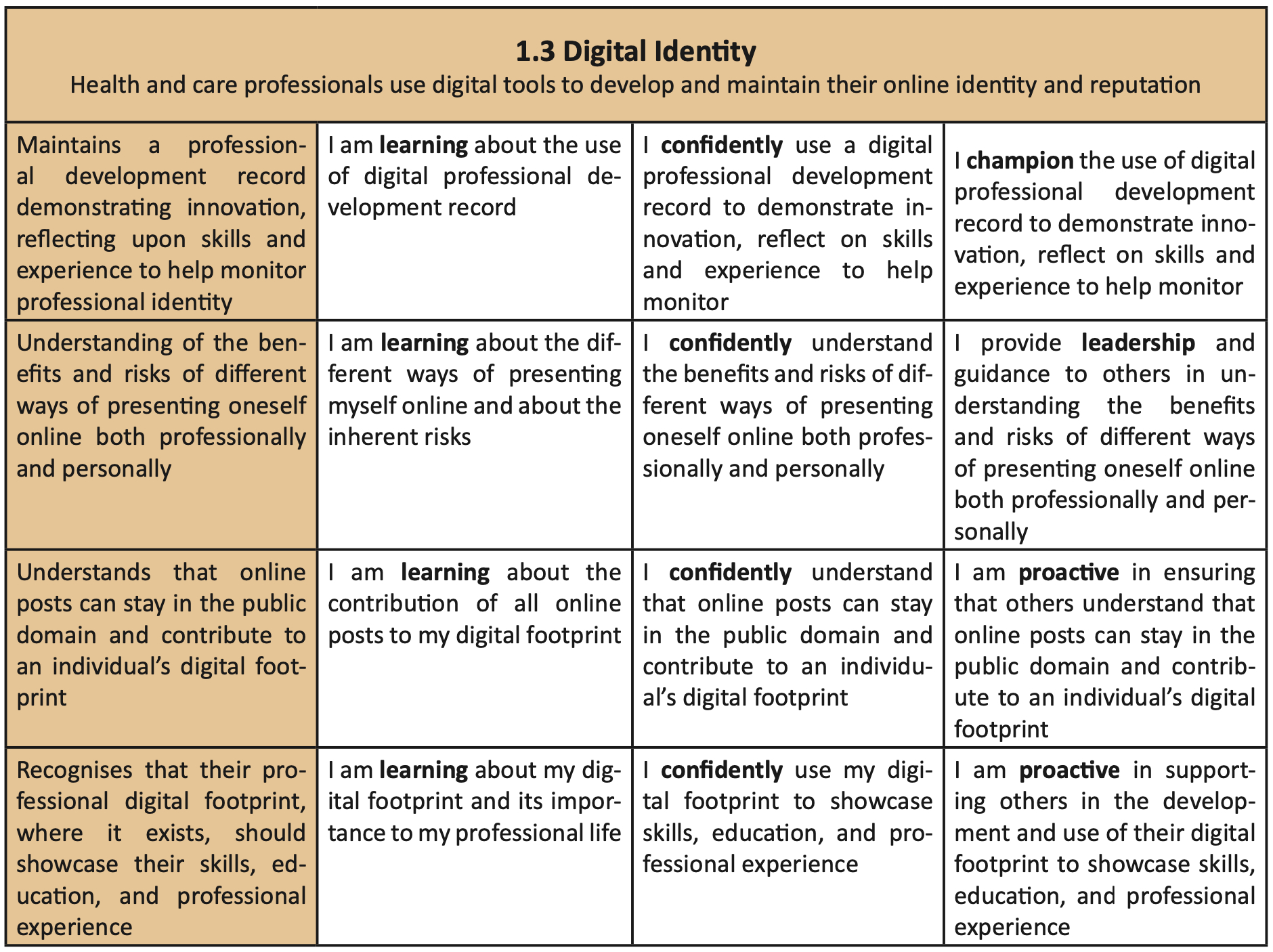
What do the capability statements look like?
Each statement is written in the first person which will help you to consider how proficient you consider yourself to be in each domain and sub-domain. For example, when exploring your digital identity, the sub-domain descriptors will provide you with three capability statements for you to consider. These use descriptors that reflect the three levels for example, learning (formative), confident (intermediate) and champion (proficient). You can use the statements to consider what more you need to do to aim for the highest standard relevant to your role.
Click image to view full size
Reflective Learning Exercise
Complete the exercises below and keep a record of your reflections.
We are always interested in ensuring our resources are valuable tools for the workforce and are keen to hear your feedback, or ideas for future topics which could be included in this resource.
Photo by Tima Miroshnichenko on Pexels